

Hiring Guide
What to Ask a PolicyCenter Developer in the First Ten Minutes
Six questions that separate configuration experience from exposure, with the answers worth listening for — and the follow-ups that catch a rehearsed reply.
Read moreAnd what to accept as a near match. Configuration work is visible and self-contained. Integration is neither, which is why the pool is thinner than it looks.

Ask a delivery lead which Guidewire role takes longest to fill and integration comes up more often than product model or rating, even though it appears on more CVs. That combination — high apparent supply, low actual supply — is what makes it the hardest hire on the suite.
The reason is that integration experience is easy to claim and hard to evidence. Configuration work produces artefacts a technical panel can discuss: screens, rules, a product structure. Integration work produces an interface that either behaves under load or does not, and most of the skill sits in decisions that are invisible once they are working.
Every second Guidewire engineer has “integration” on their profile, and for many of them it means they consumed an API somebody else designed, or extended a message destination that already existed. Genuine ownership — designing the contract, negotiating with the third party, handling the failure paths, supporting it in production — is far rarer and reads almost identically on paper.
Configuration is largely about getting behaviour right. Integration is about what happens when something else goes wrong: the downstream system is down mid-batch, a message is delivered twice, a third party changes a payload without telling anyone, the queue backs up overnight.
Engineers who have only built happy paths look completely competent in interview and surface three months into production. This is the single most useful thing to screen for.
A good integration developer needs Guidewire depth and comfort in other people's systems — queues, gateways, certificates, network rules, whatever middleware sits in the estate. Plenty of candidates are strong on one side and lost on the other, and a brief written by a Guidewire team tends to test only the half it understands.
The move to Cloud API and Integration Gateway shifted where integration logic is allowed to live. Engineers who learned the mechanisms on-premise have to rethink patterns rather than look up new method names, and the ones who have genuinely made that shift on a live programme are a smaller group than the ones who have read the documentation.
If the search is stalling, the brief is usually doing some of the damage.
None of that changes the underlying scarcity. It does change whether the people who exist can see themselves in your role.
Six questions that separate configuration experience from exposure, with the answers worth listening for — and the follow-ups that catch a rehearsed reply.
Read more
The gap is rarely the platform itself.
Read more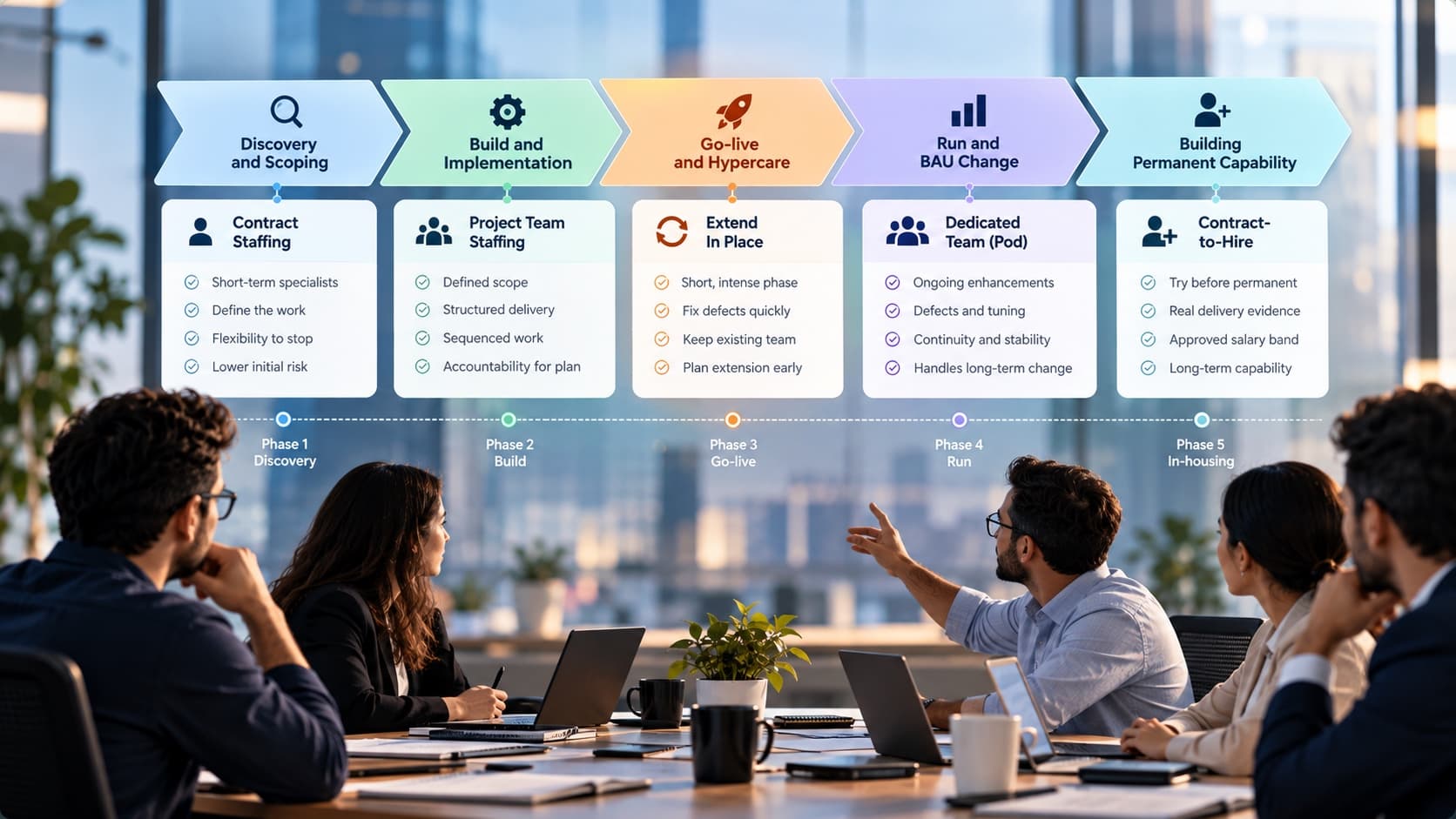
Match the model to the work in front of you.
Read moreSend a JD or a two-line outline. We come back with the roles that fit, an honest read on the market for them, and a shortlist against your requirement.
Hiring guides and market notes for insurance and financial crime technology teams.