
Hiring Guide
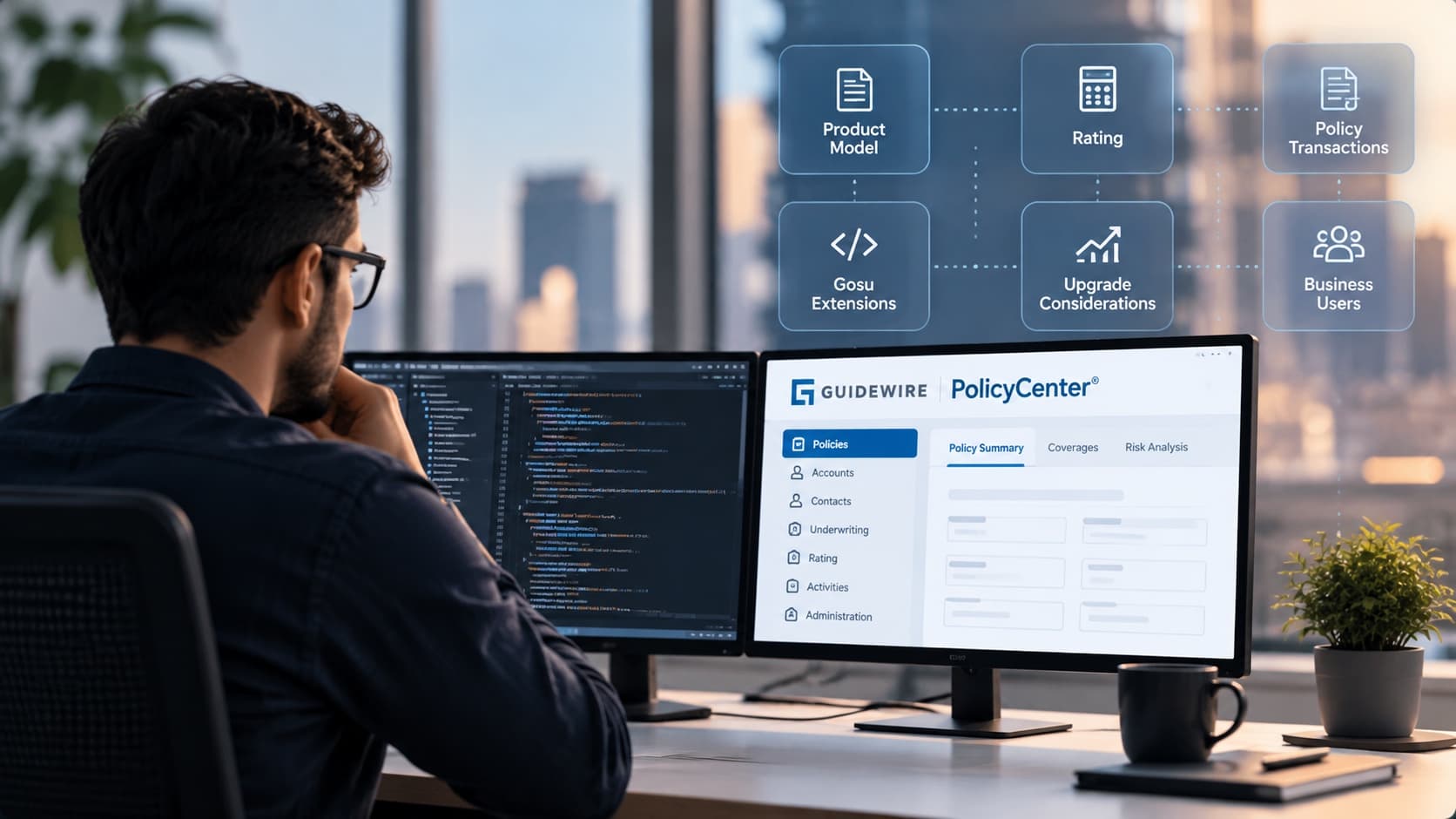
What to Ask a PolicyCenter Developer in the First Ten Minutes
Six questions that separate configuration experience from exposure, with the answers worth listening for — and the follow-ups that catch a rehearsed reply.
Read moreThe gap is rarely the platform itself. It is that nobody was made responsible for proving detection behaviour did not change — and that proof takes longer than the deployment did.
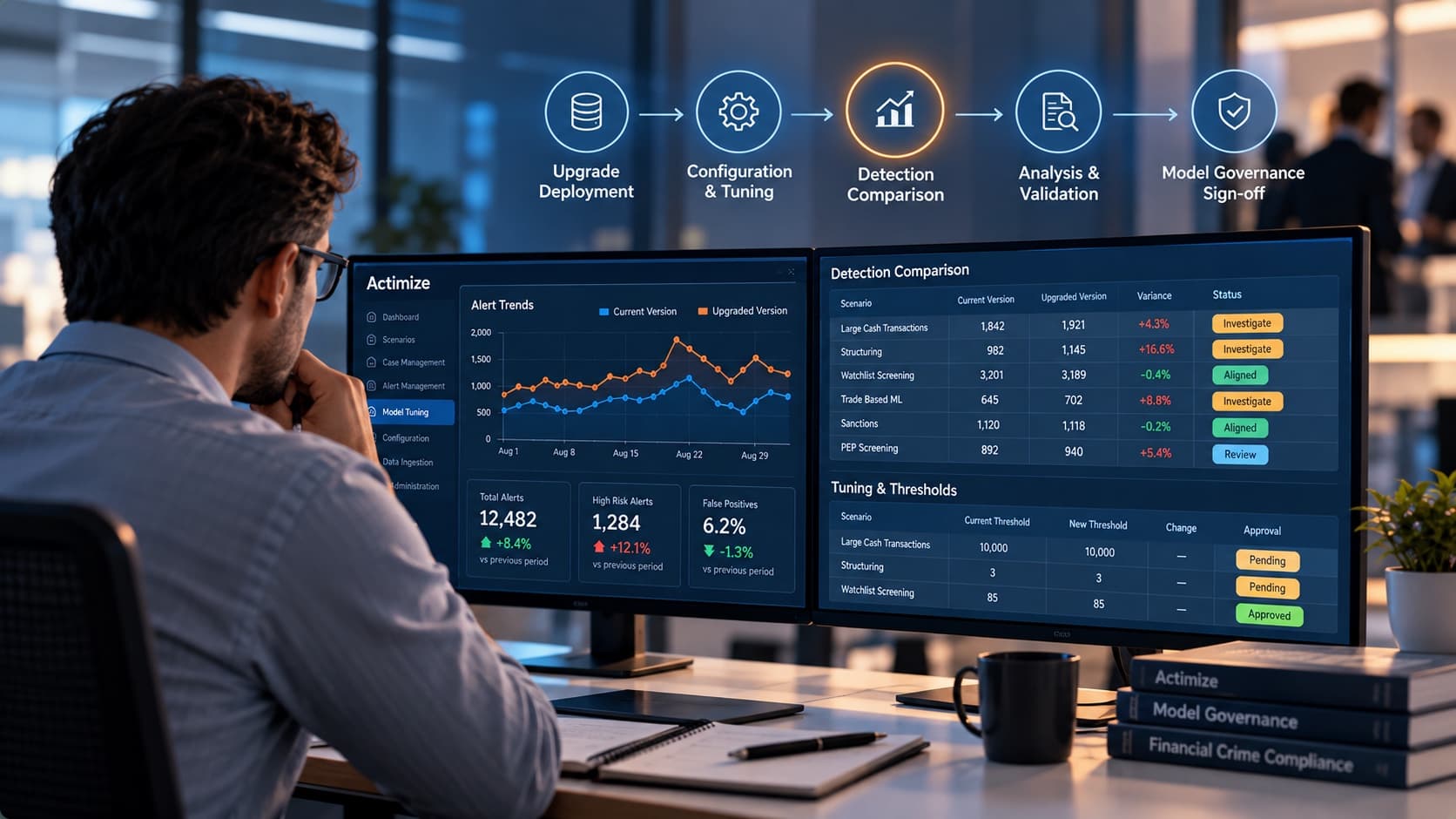
It goes like this. The upgrade is planned as a technical exercise with a regression pack at the end. Environments are built, the new version goes in, the functional testing passes, and the programme reports green for several months.
Then detection output is compared against the old version, the numbers do not match, and nobody can immediately explain why. Alert volumes move. A scenario fires on cases it did not fire on before. Model governance quite reasonably declines to sign off on an unexplained change to a regulated control, and the programme stops — not because anything is broken, but because nobody can prove that it is not.
Upgrades on financial crime platforms fail at sign-off far more often than they fail at deployment.
Tuning is where the regulatory weight of the platform becomes visible. Every threshold on a mature estate is the residue of a decision that was documented and approved, sometimes years ago and often by people who have since left. The current settings are not just configuration; they are an approved control.
Which means an upgrade has to answer a question that ordinary software upgrades never face: is the detection the same? Not “does the system work” but “does it produce the same outcomes, and where it does not, can you explain each difference and show that coverage has not been reduced?”
That is an analytical workstream, not a testing task. It needs someone who can design a comparison, run it across a meaningful data window, investigate every variance and write it up in language a governance committee will accept. If nobody was given that job in the plan, the work starts at the moment the programme thought it was finishing.
Test leads own functional and regression coverage. Detection comparison is a different discipline, and on stalled programmes it is usually assumed to be somebody else's. Naming an owner at mobilisation — with the authority to hold the go-live date — removes most of the risk.
Moving the same numbers to a new version feels conservative, and often is not. If underlying calculation, aggregation windows or reference data handling have shifted, identical settings can produce materially different output. The safe assumption is that carried-over thresholds need evidence, not that they need none.
An upgrade frequently touches how data arrives — mappings, reference data, enrichment. A field that is now populated slightly differently will change detection while every functional test still passes. Reconciling the feed against source before comparing detection output saves weeks of investigating the wrong layer.
Running old and new side by side needs environments that behave, data volumes that are representative, and time in the plan. It is the first thing compressed when the schedule slips, and compressing it guarantees the sign-off conversation happens without evidence.
| Workstream | Owned by | Starts |
|---|---|---|
| Upgrade execution | Upgrade engineer | At mobilisation |
| Customisation remediation | Platform engineer | After impact analysis |
| Feed reconciliation | Data engineer | Before detection comparison |
| Detection comparison | Named test or validation lead | At mobilisation, not at the end |
| Threshold revalidation | Tuning analyst | Alongside comparison |
| Governance submission | Programme lead | Scheduled, with a draft early |
Two things in that table matter more than the rest. Detection comparison starts at mobilisation, because designing the comparison is itself work. And the governance submission is scheduled with a draft circulated early, so the committee's questions arrive while there is still time to answer them.
Any two of those together is worth raising before the next steering meeting. All six, and the date in the plan is not the date you will hit.
Six questions that separate configuration experience from exposure, with the answers worth listening for — and the follow-ups that catch a rehearsed reply.
Read more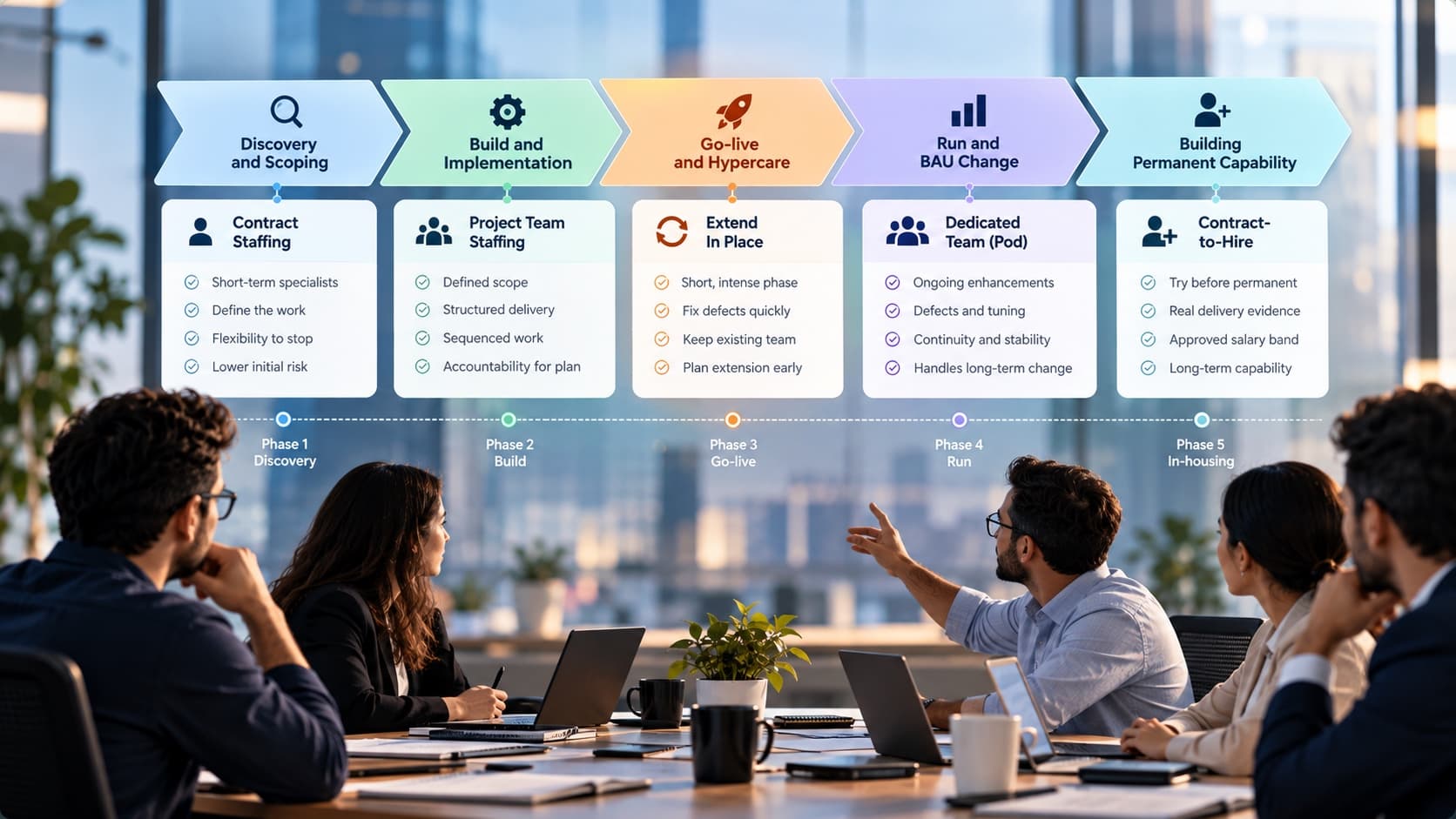
Match the model to the work in front of you.
Read more
And what to accept as a near match.
Read moreSend a JD or a two-line outline. We come back with the roles that fit, an honest read on the market for them, and a shortlist against your requirement.
Hiring guides and market notes for insurance and financial crime technology teams.